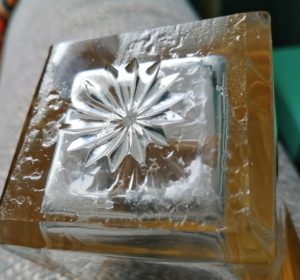
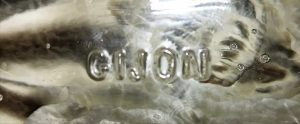
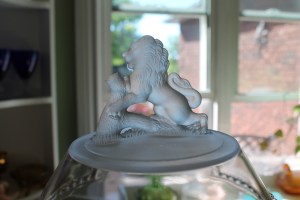
 I will never be a detective. Since February I have failed to notice that the underside of this lion is marked with ‘GIJON’. I just happened to be looking at it yesterday and finally noticed this.
Through my online searches I determined that Gijon is in Spain. I posted queries about my lion in a few spots and then emailed the public library in Gijon seeking information about the production of this lion.
The staff were super helpful and provided me with some written info and images of a catalog and the page on which this lion is listed.
So…..
“We can tell you that it is part of the illustrated catalog of hollow glass (white and colored) from 1898 belonging to the Cifuentes y Pola de Gijón factory.
It i s the first glass factory in Asturias, it was founded in 1844 by Anselmo Cifuentes Díaz, Mariano Pola, the Toral family, the Marqués de San Esteban and the Count of Revillagigedo, with a share capital of 1,200,000 reais. It was directed, in its beginnings, by the Swiss coach Luis Truan. No Spanish glass factory of the 19th century could surpass it, in number, variety and quality of its products. Its facilities were demolished in 1954.
The object identified in the catalog with the number 301, had a price of 150 pesetas, to make a day of its value keep in mind that in 1899 the average salary in Spain was about 2.50 pesetas a day, a worker did not reach earn 100 pesetas a month.”
A helpful person from Collectors Weekly sent me this  page from a Gillinder catalog which shows the exact lion.
The big mystery now is why the two pieces appear to be exactly the same and how this happened.
_____________________________________________________________________
February 21, 2021
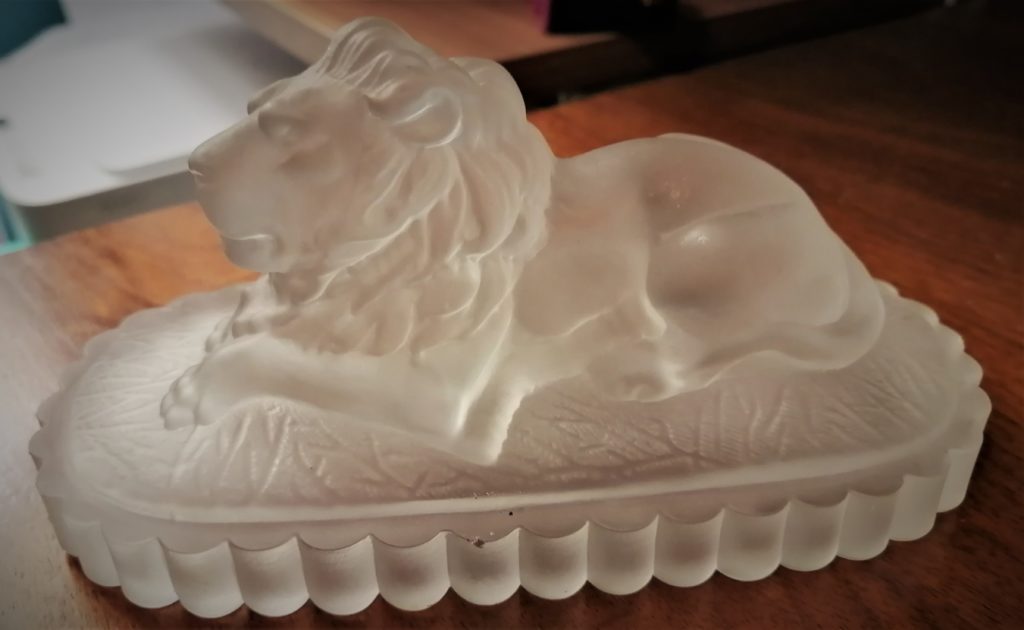
Paperweight
_____________________________________________________________________
June 7, 2015
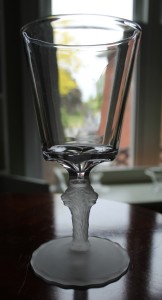
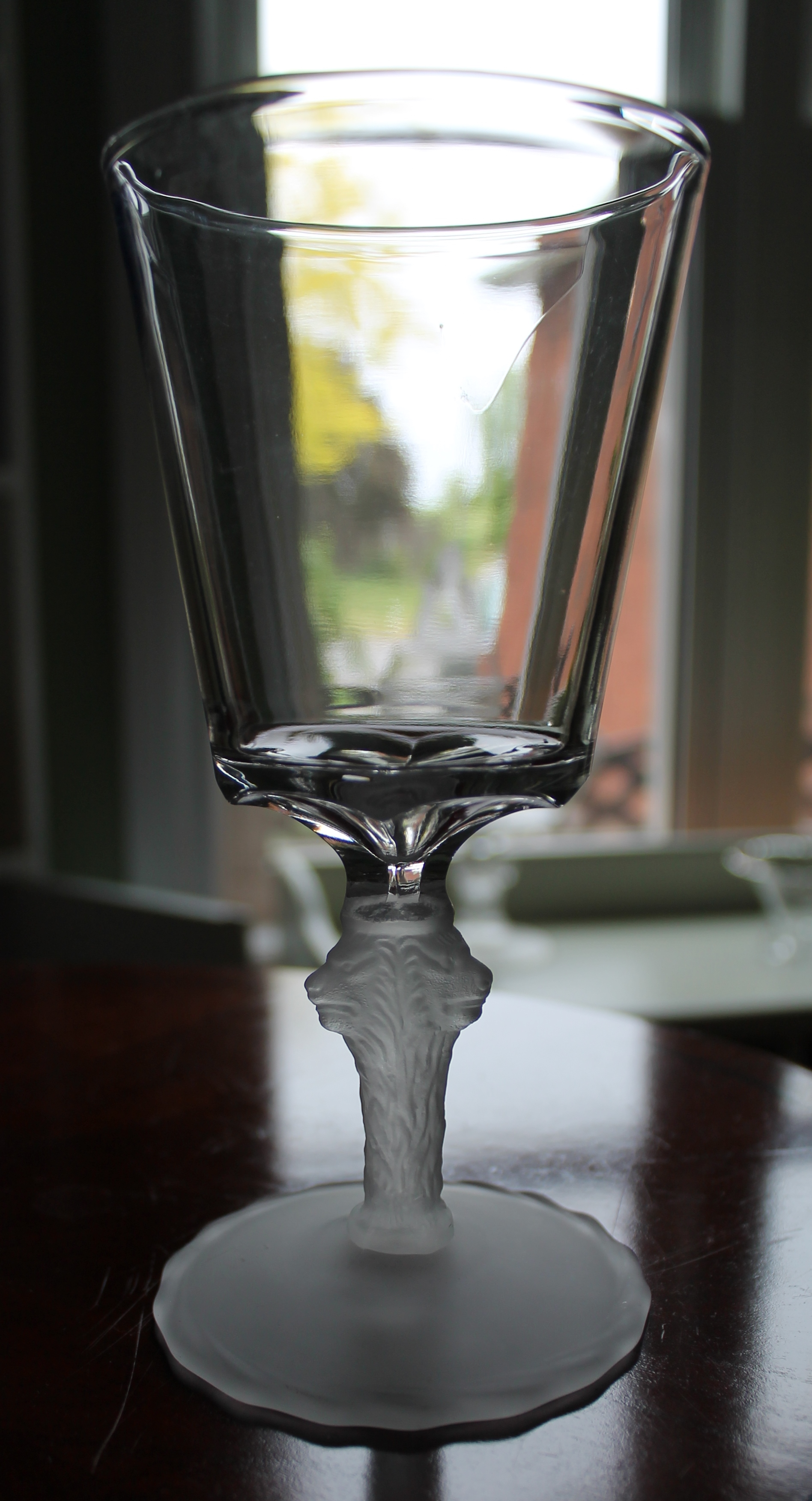
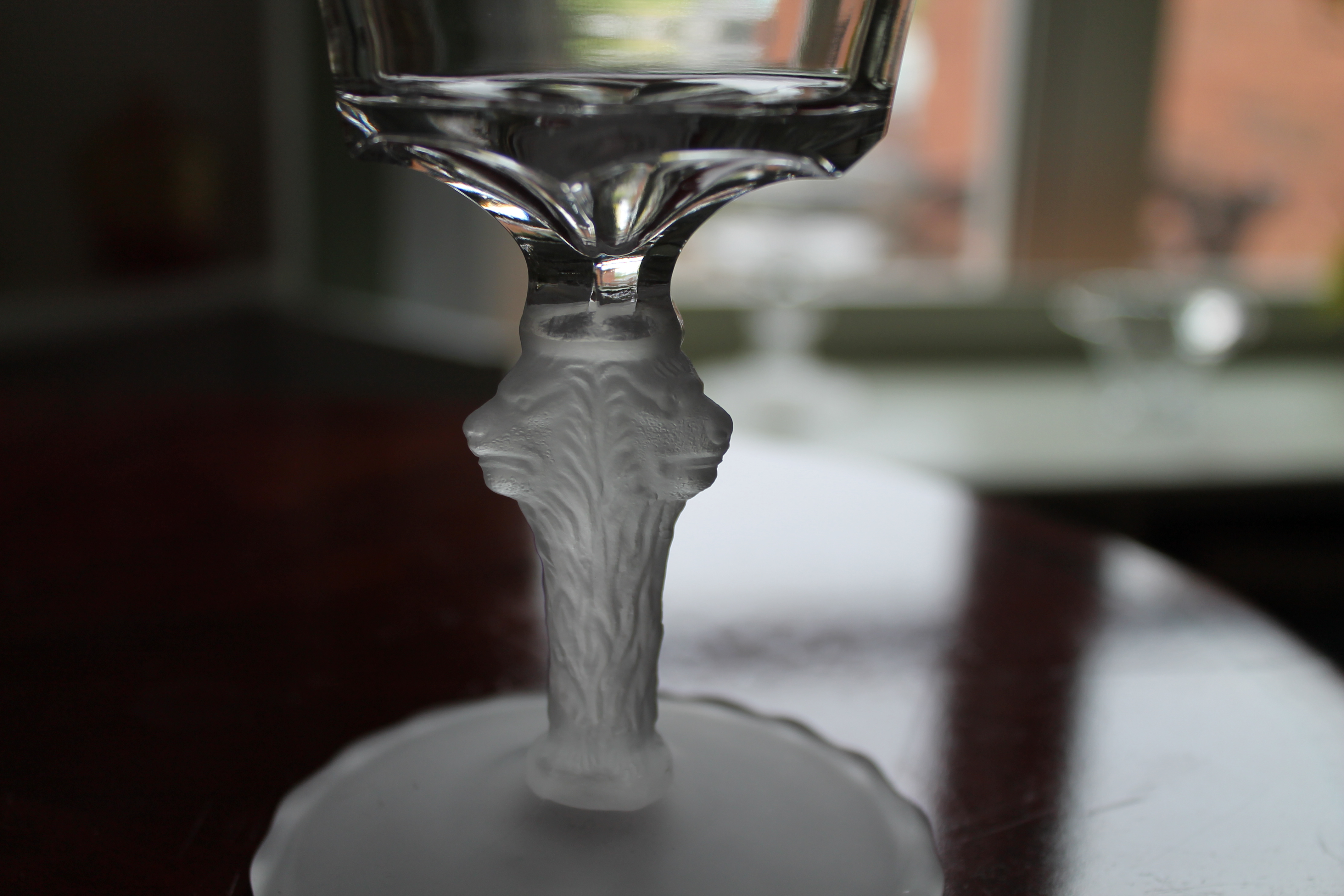
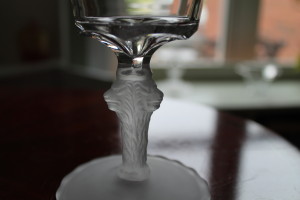
Although I still don’t know how to identify a possible repro lion I picked up this water goblet in Florida.
Original post – September 13, 2014
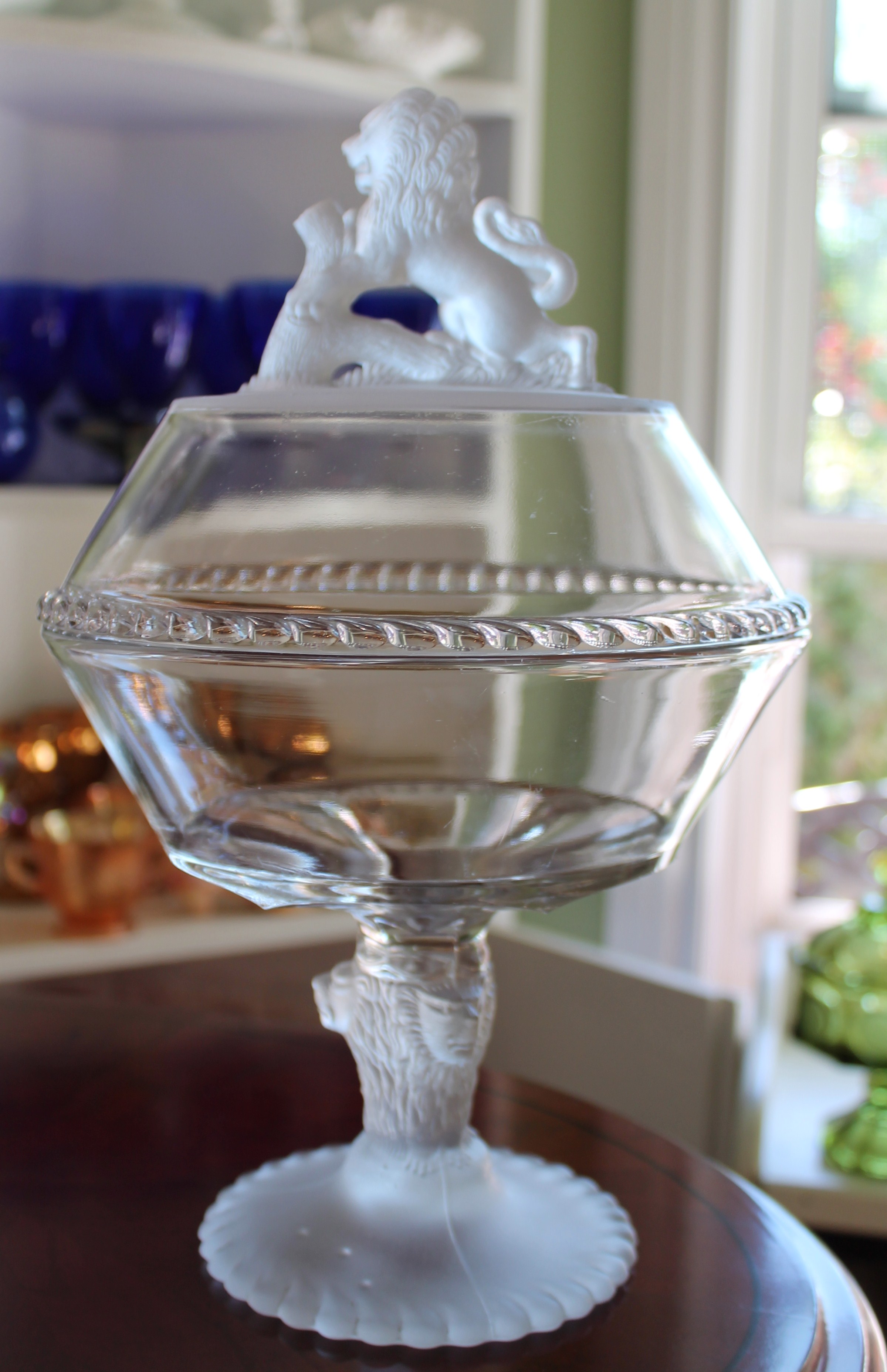
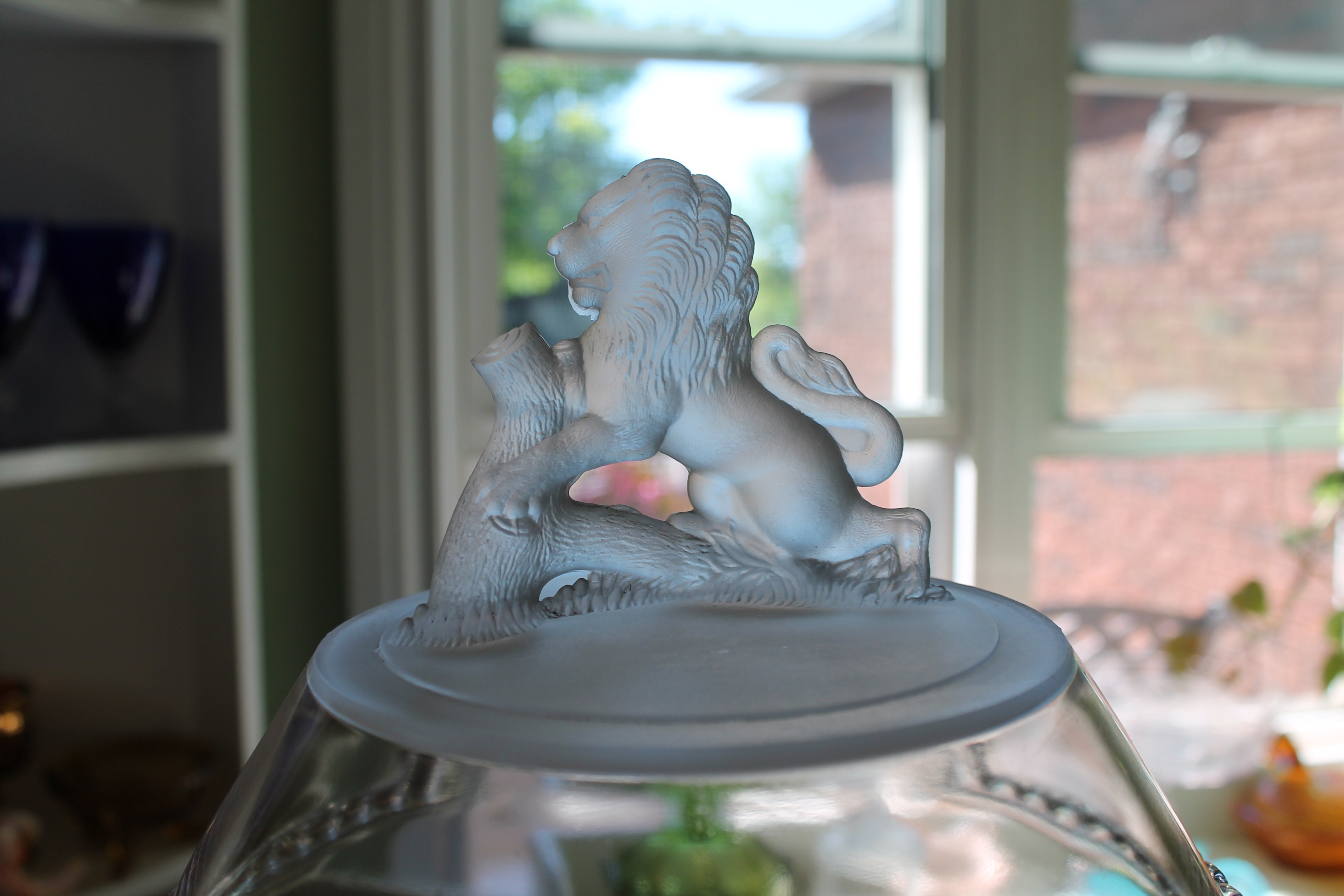
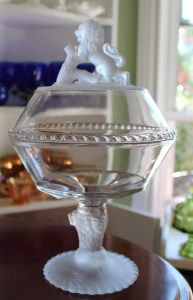 Isn’t this magnificent? A couple of Leos live in this household. So….I like the lions and have wanted a piece for some time. I picked this up at a local auction a couple weeks ago.
It is a Gillinder and Sons compote.
Here is a little history of the company from The Daily Journal:
“William T. Gillinder was born in 1823 at Gateshead near Newcastle-upon-Tyne, England. He entered the glass-making trade learning how to make paperweights at George Bacchus & Sons in Birmingham, also in England.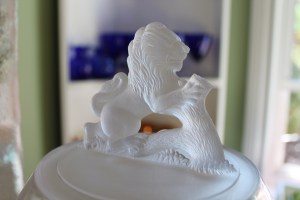
Gillinder came to the United States in 1853 and worked for at time at the New England Glass Company in East Cambridge, Mass., making paperweights. He moved to such places as Pittsburgh and St. Louis before settling in Philadelphia in 1861.
Gillinder bought a glassworks there that he renamed the Franklin Flint Glass Works. He was joined by Edwin Bennett in 1863 and the company changed its name to Gillinder and Bennett. Then Gillinder’s two sons, James and Frederick, joined the firm, which became Gillinder and Sons.
William Gillinder died in 1871, but his sons carried on.”
 I was looking at some water goblets online that purported themselves as Gillinder. I knew that there were repros so I looked for some information about them. I came across this article from the book Gillinder & Sons Early American Westward Ho Pattern Glass published by Westward Ho Publishing. The photos in the article were so clear, as was the explanation. So……I bought the book and didn’t buy the glasses. I just ordered it and am looking forward to seeing it. The focus of the book is the Westward Ho series. I don’t have any pieces, but I do like the Gillinder pieces, and would be interested in acquiring some for myself, if I was sure they were originals. I’d like to get a comparable book about the lion patterns as well.
Another interesting piece from the Wheaton Arts and Cultural Center:
“Gillinder pressed glass has been admired by collectors due to the remarkable detail in the carving and controlled acid etching of the molded designs. As early as 1873, the factory had utilized etching acids. “Lion” was the first of these characteristic patterns. Introduced after the Centennial, the “Lion” pattern was available with lions posed in differing positions as finials on covers. Called Lion No. 1, Lion No. 2, or New Lion, the combinations were the lion sitting, the lion attached to a log and the lion head alone. All of the lions were etched with acid but the bases differed. Some were designed with plain cable feet while others had a collared etched border of sitting lions.”
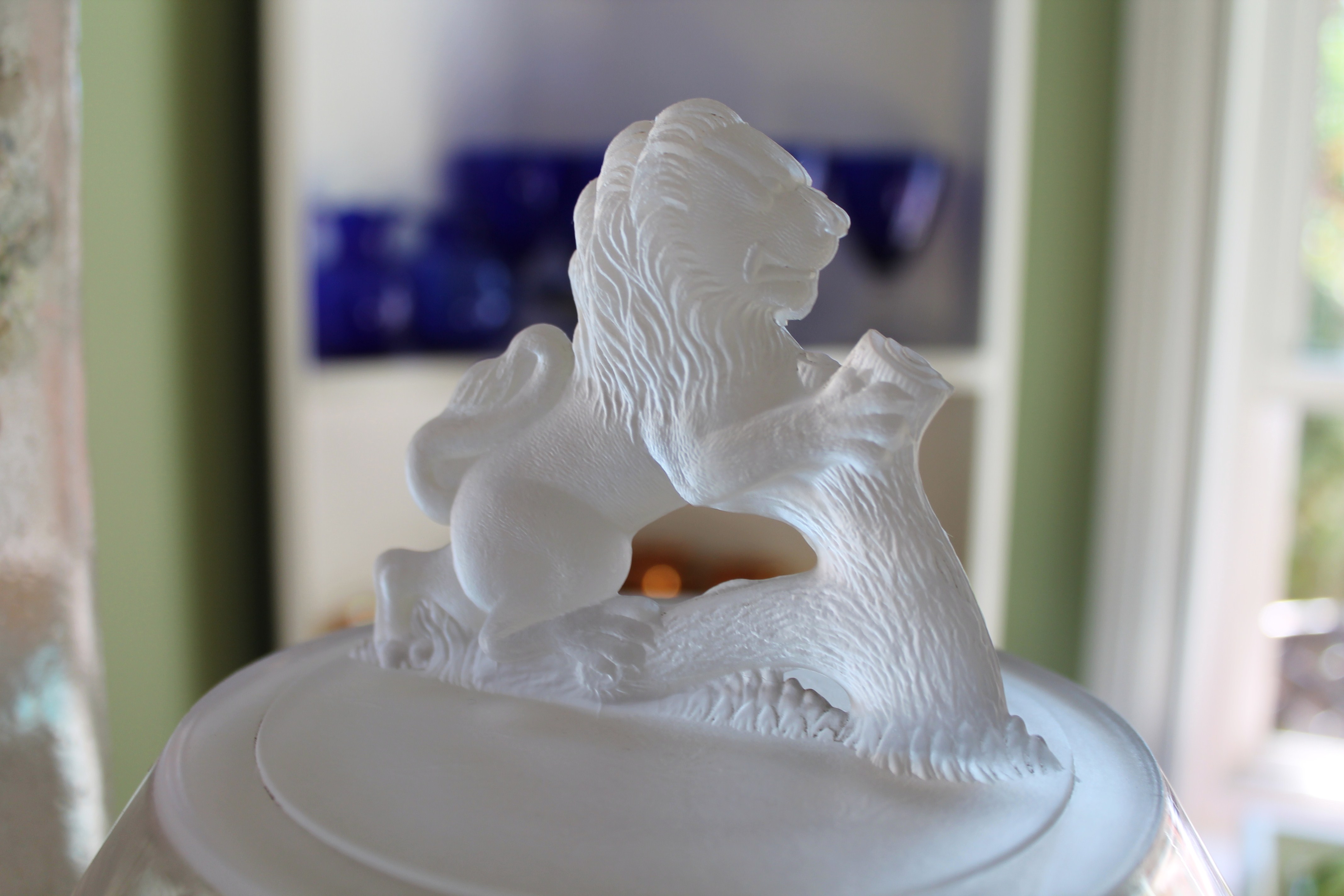
I am wondering if this is Lion No. 2. I’ve seen it referred to as Rampant Crouching Lion.
Cameron Freeman provides some information on Lion reproductions:
“Gillinder’s “Frosted Lion” was first introduced at the Centennial exposition in 1876. A true test of a genuine piece of “Frosted Lion” would reveal excellent details, especially the fur on the animal. Also, the frontal view of a genuine lion piece will present a pleasant gaze, where a reproduction is almost grotesque in appearance. A true “Frosted Lion” glass has lead in the batch when it was produced. Under ultra-violet light the example will have a blue florescence; otherwise it should be considered suspect.”
I am betting that this piece is an original. The detail in the fur is amazing and the frosted lions glow blue. I am not sure about the pleasant gaze – the faces all look stern.
In any event…the four lions are gorgeous!
Here’ an interesting site:
Real or Pro: your online source for identifying fakes and reproduction