Tags
Acid Etch, Blue Glass, Brocaded Glass, Candle Holder, Candleholder, Candlestick Holder, Colored Glass, Coloured Glass, Iridescent Glass, Orchid Glass, Pink Glass, Plate Etched, Purple Glass, Roses
Found this pretty pair in pink. Think this might be Fostoria’s ‘Rose’.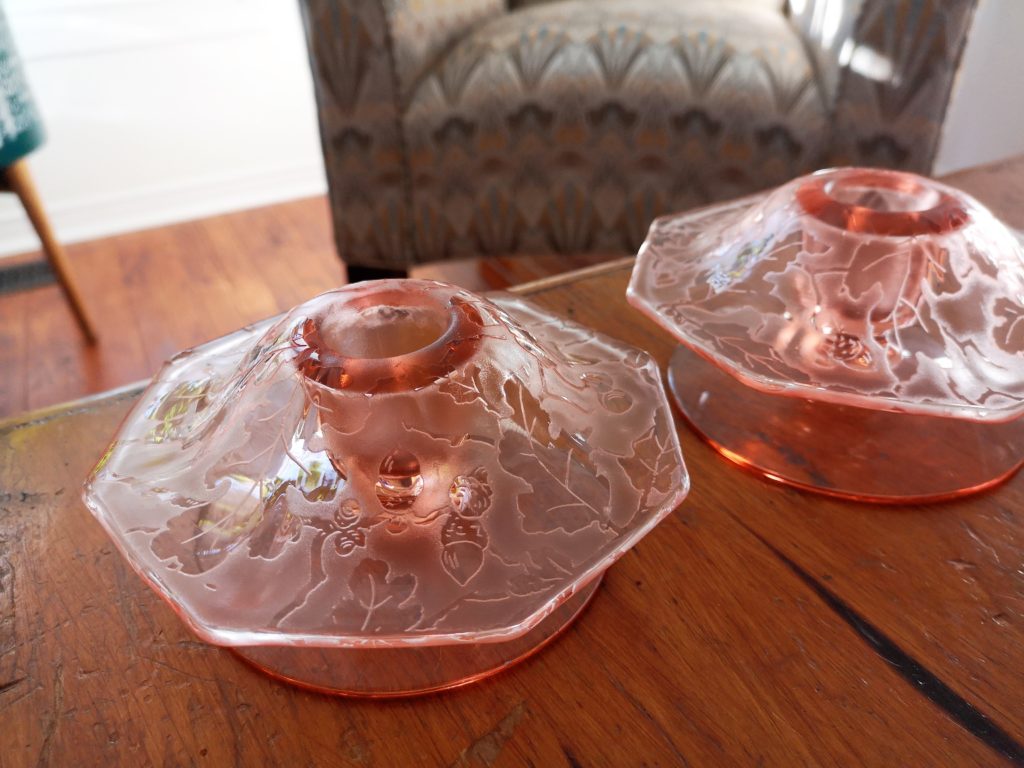
July 23, 2017
 My husband and I took a road trip to the Poconos this month. We stopped in many antique shops and I have brought home along of new (old) glass. Who knew that I would acquire another piece of Oakwood so soon after the last purchase.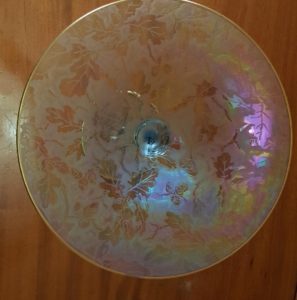
This pretty compote is in the blue. This really is an attractive etch and the iridescent colours make the blue glass sing.
June 18, 2017
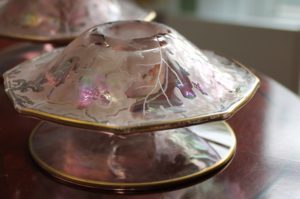 I had my eye on this pair of candle holders at Around the Block for some time. I had to wait a few months until the price dropped but they finally came home with me. I have always been fascinated with the Oak Leaf brocaded plate etch – #290. I just plain like oak trees and acorns period!
I found this interesting information on the brocaded etches at Carnival Glass 101:
“Perhaps the most popular and most extensive Brocade line was the “Oak Leaf” pattern, plate etching #290, which was presented as “Oak Wood”, decoration #72, when the azure (green) color was iridized and trimmed with gold. This pattern was introduced in 1928 and discontinued in 1931. It was also made in rose (dawn), ebony and crystal.”
These mushroom candle holders are the orchid. The iridized colours are pink, green, 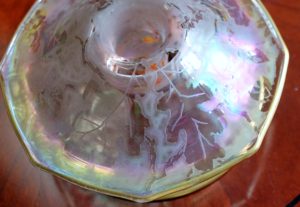 blue and yellow. Very striking – I would love to see the stemware.